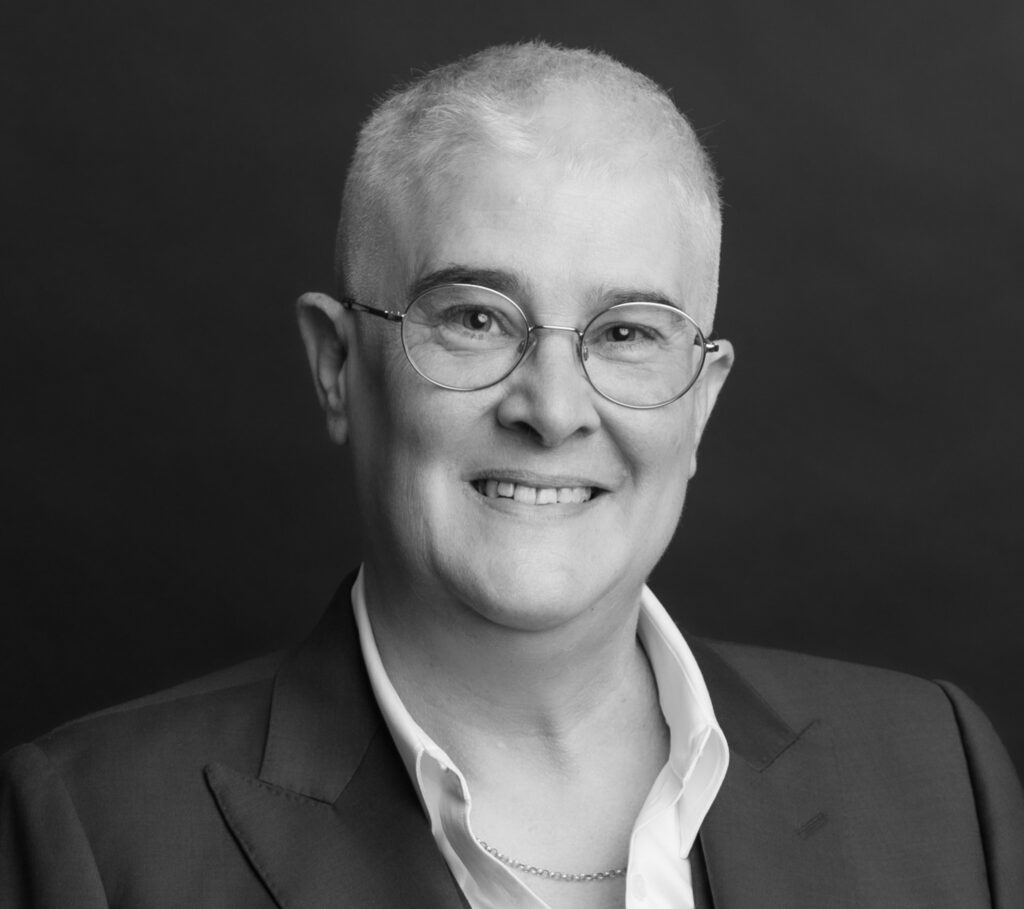
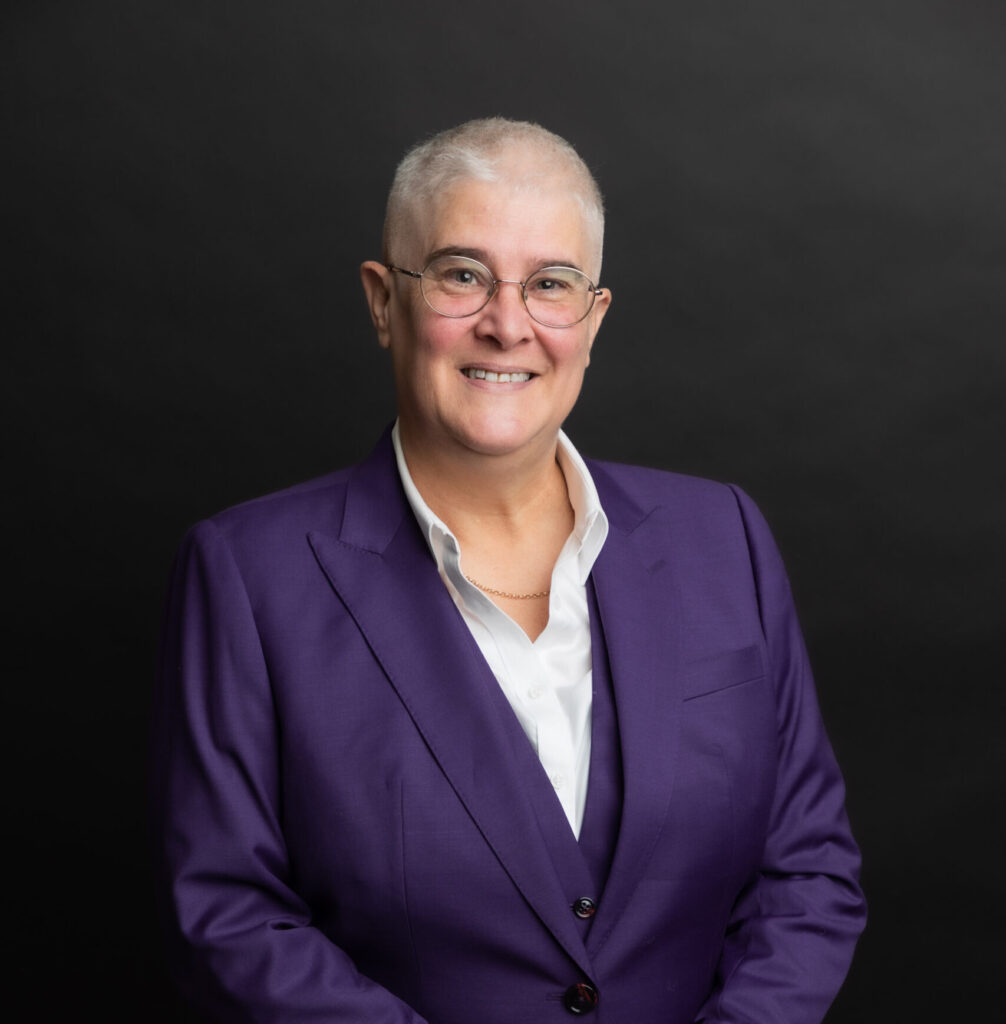
Mel Neil has spent more than 20 years teaching emotional intelligence (EI) to leaders, teams and individuals across healthcare, education, construction, community services and beyond. She knows the research. She knows what works. And she knows, better than most, why emotional intelligence matters and where the field has been getting it wrong.
The Institute of EI is Australia’s dedicated emotional intelligence education institution, and her answer to that. We sat down with Mel to find out what she believes the market has been missing, what drove her to build it, and what she hopes changes for the people who come through the Institute.
Why emotional intelligence matters — and why the market has been getting it wrong
Was there a moment — or a realisation — that made you think “I need to build something new” rather than keep doing what you were doing?
Most practitioners in emotional intelligence, when they’ve engaged with the neuroscience of emotion, will have learned a concept called the triune brain. It’s what I was taught. It was the prevailing view, and unfortunately, in many cases, it still is today.
It was a concept developed by Paul McLean, a neuroscientist in the 1960s, at a time when we knew far less about the brain than we do now. It basically divided your brain into three bits, talked about how they sequentially developed, and taught people that they had a lizard brain responsible for processing emotion. The story went that when you experienced an intense emotion, you had an amygdala hijack and your lizard brain went berserk, jumped into survival mode, and your thinking brain stopped working.
It was a great story. It’s also absolutely nonsensical. Not at all based in reality in terms of how our brain actually processes emotion.
About ten years ago, I was providing facilitation training for some budding consultants wanting to immerse themselves in emotional intelligence. And of course, what did we trot out? The good old triune brain. It almost broke my soul, because even while I was delivering that concept, I knew it wasn’t true.
That moment was the catalyst. It was time to find a new way to talk about the brain and how it actually processes emotion. Over the ensuing years, I dived headfirst, completely underwater, into neuroscience. I stepped outside the usual suspects as experts, because there are a whole bunch of very cool people doing serious work in this space.
The first thing I’ll say is it’s really, really complex. It’s not accessible. Taking the literal science and turning it into something practical is genuinely difficult. From that work emerged the brain networks of emotion — the system we use to describe what happens when we experience emotion. It’s not 100% accurate. There are still conceptual parts to the model. But it is absolutely grounded in what neuroscience is telling us about the reality of the experience.
I get that when we’ve had limited information available, we do our best with what we’ve got. But we’ve had better science for a long time, and have continued to be lazy in this space. I was absolutely determined to do something about that.
What has 20 years in EI shown you that the market simply wasn’t delivering?
One of the key differences in what we do is that we actually teach about emotion, not just EI. The vast majority, and I mean almost all, of EI training is based on a framework that is part of a proprietary tool. A tool that measures emotional intelligence. All training, whether for the practitioner or for the person undergoing it for development purposes, covers only the concepts associated with that particular framework. Not the science of emotion broadly. Not the science of emotional intelligence as a concept.
So whilst I might use a tool in an assessment process, get my results, put an action plan in place, and do the hard work, the benefit I gain will be corralled within the boundaries of what that tool measured and the development tips it offers. There are massive limitations for practitioners, but also for us as human beings trying to get to the bottom of: why did we struggle to sit through that meeting and concentrate? Why do we find it so difficult to work with that colleague? Why, when a particular topic comes up, can we not engage in a meaningful conversation? Why do we sometimes find ourselves so dysregulated that we say something we can’t take back?
In order to have a proper skill set around emotion, we have to actually learn the entirety of the science. Twenty years in EI training and development have demonstrated to me very clearly that a full, entire understanding of emotion and emotional intelligence has never existed in the marketplace — for individual development, organisational development, or otherwise. We exist to change that.
Why does the world need a dedicated EI institution — not just more EI workshops?
Emotional intelligence, certainly in the world of work, has been confined to the concept of soft skills. It’s been considered a nice-to-have, not a critical requirement. It’s often been associated with leadership or supervisory roles, and so a lot of frontline people don’t get access to the training and development. And then of course, we think about all of the other contexts in which we exist as human beings, emotions are part of what we do everywhere.
In many offerings, EI gets bundled with leadership capability, social skills or influence — threaded through other frameworks until the learning opportunity around emotion specifically gets diluted. And emotions are an actual, specific thing. It also detracts from the significance and depth of the science that actually exists. This is not a nice concept with a little bit of science behind it. It is a complex, sophisticated discipline with enormous amounts of research behind it in its own right.
So a dedicated EI institution commits to keeping emotions and emotional intelligence capabilities at the core, the foundation of all development that springs from it.
Let me tell you a story I commonly use. Imagine I’m a carpenter, and a brand new hammer comes out. It’s so beautifully crafted and engineered that it increases the accuracy at which I can hit the nails, requires less effort, and reduces fatigue. It puts me at a competitive advantage over every other chippy on that work site. An incredible, purpose-built tool with credible science behind it that promises and delivers remarkable outcomes. That’s the quality of the tool. Brilliant.
Now, on a day when things haven’t gone well — I’m running late, had words with a loved one, opened an email I wasn’t hoping to see. I’m under pressure, experiencing a range of complex and difficult emotions that have taken a grip on me. Without the ability to understand what’s happening, why it’s happening, and then manage myself and self-regulate, when I take that state-of-the-art hammer out of my toolkit and start using it, I guarantee you my error rate will be high. I will miss more nails than I’ll hit. I will not be able to use the quality tool with the precision required to maximise its benefits.
I can have the best hammer in the world. But if I can’t manage myself while in those emotional states, it doesn’t matter what sort of hammer I’m holding. The results will not be what I want.
Emotional intelligence competencies are at the heart of any skill we’re trying to help somebody learn. Whether it’s teaching, carpentry, raising children, being patient in a line, or learning a new hobby, it doesn’t matter what anybody’s trying to do, or what context they’re doing it in. Emotional intelligence competencies are the foundational skill set that will enable a person to perform a task at the level of effectiveness they’re striving for.
A dedicated institution ensures that all offerings have emotional intelligence at the core of what is delivered. That will not get lost; it will not get diluted. It will continue to be the heartbeat of every training, upskilling and professional development opportunity offered.
What do you want someone to feel at the end of their first course — not what they know, but how they feel?
I often talk about giving people a sense of agency. What I honestly believe wholeheartedly, and I’ve built all of my work on it, is that every single person has the right to access the science of emotional intelligence and emotional skills, because they are so fundamentally critical for us as human beings to live a healthy, flourishing life.
My goal is to put people back in the driver’s seat of their lives, so they can take agency in the moments when their best version is not currently showing up. Rather than being at the mercy of the environment, at the mercy of their emotions, at the mercy of what other people do and say, or the circumstances they find themselves in, emotional intelligence competencies give people back agency over all of their moments. The very best ones, the very worst ones, and everything in between.
When people finish any type of development training with the Institute, they will feel like they have agency back over their lives. That they are back in the driver’s seat of the way they behave, the way they perform and the quality of the decisions they make, which impact every aspect of their lives.
Empowerment, confidence, clarity, desire, and an absolute belief that they can back themselves in. That’s what I wish, I desire, I hope, and I reckon I know, for every single person who trains with us. That’s how they feel.
What do you hope the Institute of EI changes — for the people who come through it, and maybe more broadly?
So a few things.
At an individual level, people feel agency over their future and their outcomes, daily and on a broader scale. Higher levels of meaning and purpose. More positive emotion than negative. Recovering from trauma and setbacks in healthy and sustainable ways. Extracting every bit of joy out of every positive moment. And having a positive impact on the people around them — a contagion of kindness, hope, accomplishment and contentment. Better decisions. Higher quality of life, physically and psychologically. Lower rates of depression and anxiety — and if they are afflicted by those conditions, they are able to genuinely, fully recover. People living the lives they want. Whether that’s small, incremental changes where it matters most, or wholesale transformation — every adjustment is worth the while.
At an organisational level, I want EI elevated. I want organisations to invest in real opportunities, not the diluted versions, not programs built around a tool. A real commitment to giving people the capabilities to not just flourish at work, but to flourish in their lives outside of work too. Work is such a big part of our lives. It needs to be a source of enrichment. It needs to add value. It needs to be meaningful. It needs to create moments of flourishing. We need to extend our thinking about our human workforce well beyond the organisation’s boundaries.
And for the world, I want to see more kindness. I want people to understand why emotional intelligence matters. I want to see less war. I want to see emotionally intelligent leaders right across our globe making really skillful decisions in very complex environments, based on the very best of humanity, creating a world where everyone gets an opportunity to thrive. At the heart of every war is at least one person who couldn’t manage their emotions. Emotional regulation allows us to pause, consider, and ensure the very best version of us shows up in as many moments as possible. One human at a time. One organisation at a time. And then it broadens to the community level, the global level, and the world changes.
Emotional intelligence changes the world. It absolutely does.